
Duro changelog
v2.2.6
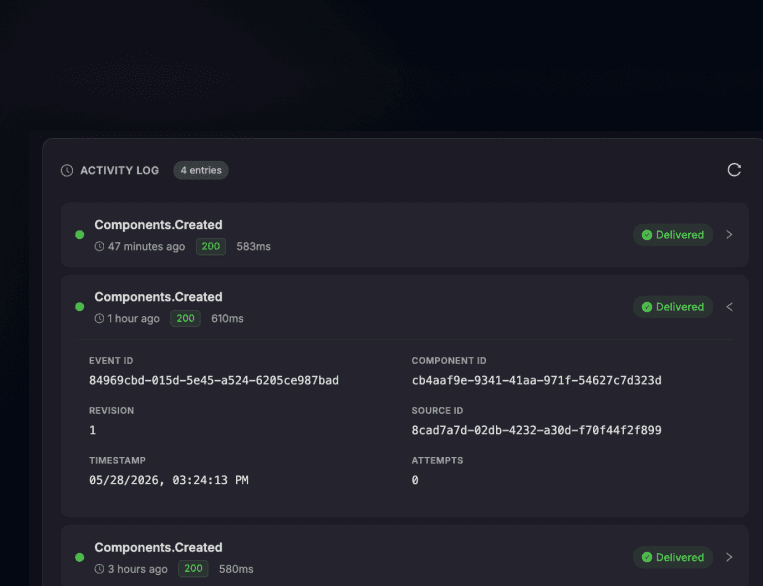
Webhook delivery got a bit more grown up in this release. You can now filter webhook logs with cursor-based pagination, report processing outcomes back as success or failure, and rely on the new delivery path as that system moves over.
What's new
Webhook logs now support cursor-based filtering, which makes it much easier to work through large delivery histories without wrestling a giant list.
Webhook processing outcomes can now be reported back explicitly as success or failure, giving teams a clearer picture of what actually happened after delivery.
The home page has been redesigned with a new three-column layout, an active organization switcher, a profile rail, and better visibility into invites and suggested organizations.
Improvements & fixes
Revision tags now show modified-descendant counts, along with a tooltip so the new indicator is not just sitting there like a mystery light on a dashboard.
Attribute uniqueness can now be enabled directly in the attribute editor, with matching validation across edits, imports, and change orders.
Importing into an existing assembly now replaces BOM contents correctly, and file imports can add newly created components straight into the target assembly.
Spreadsheet imports now enforce the required columns based on whether you're creating or updating records.
Archived organizations and companies now free up their name, slug, and domain for reuse — and no longer block recreating the same organization afterward.
Historical component revisions now include the sourcing state from that point in time.
Obsolete components are now limited to the cleanup actions that are actually allowed.
Compare-related actions now use more consistent naming across the product.
The import template now uses a single BOM Level field, so completed templates can be uploaded again without remapping columns.